


What type of food is most profitable in a food truck?

Profitability in a food truck business doesn’t happen by chance. To ensure your business is sustainable and scalable, you need to consider these three factors, which are based on real-world business experience:
- Visual Impact: A striking food truck design is your best salesperson. At a highly competitive event, the truck’s exterior appearance ensures a steady flow of customers. If the truck doesn’t catch people’s eyes, they’ll head to the one next door before even reading your menu.
- Service Speed: Time is money. Shorter wait times mean serving more customers during peak hours. If it takes 8 minutes for your dish to be served, you’re losing money. You need recipes that can be served quickly.
- Menu Cost Control: Knowing the actual cost is vital. If you don’t know how much each gram of an ingredient costs you, you’re working for free.

Menu Ideas (with real photos)
Mexican Food: Burritos, Quesadillas, and Nachos
Mexican food is the king of street food. These dishes are easy to eat on the go, highly customizable, and visually striking—perfect for sharing on social media. Burritos and nachos allow for many variations without complicating kitchen operations.
The secret? It’s a feast for the eyes, you can eat it standing up without making a mess, and best of all for those of us on the other side of the bar: it’s ridiculously efficient. If you organize your mise en place, with four or five containers (the proteins ready, cheese, the pico de gallo, and a couple of sauces), you can put together three different dishes in less than a minute. Fewer burners on at any given time, faster service, and more profit.
Burritos: The Rush-Hour Tank
The burrito is the perfect choice for customers who want to eat well, quickly, and keep moving. Everything is neatly wrapped in a wheat tortilla, so the risk of the customer getting their shirt dirty is minimal.
-
In the kitchen: The trick is in balancing the moisture levels. If you add too much liquid, the tortilla will fall apart at the bottom, and you’re guaranteed to get a complaint. The rice with a hint of lime and the well-drained beans act as a “sponge” for the meat juices.
-
For the menu:
-
The Beef One: Strips of roast beef (that falls apart on its own), rice, black beans, and fresh pico de gallo to cut through the richness.
-
The Savvy Vegan: Well-seasoned mushroom or textured soy protein tinga (with a hint of chipotle), rice, and a generous helping of guacamole.
-
-
The visual hook: Forget about handing it over whole. Make a clean diagonal cut down the middle before wrapping it in the paper. That cut, where you can see the colors inside and the cheese stringing out, is what people photograph before taking their first bite.

Quesadillas: Speed and Profit Margin
A quesadilla is a lifesaver when you’ve got a pile of receipts. The cost of the ingredients is very low, and the cooking time is minimal.
-
In the kitchen: You need a cheese that melts quickly but has some body (mixing mozzarella with a good cheddar or soft cheese works great). The omelet should be golden brown and crispy on the outside, not soggy.
-
For the menu:
-
La Gringa: Shredded chicken marinated in achiote, grilled onions, and an outrageous amount of cheese.
-
La de la Huerta: Strips of bell pepper, sweet corn, well-sautéed red onion, and cheese.
-
-
The operational trick: At a festival, when a large group comes in in a hurry, you can cook four quesadillas on the griddle at once. In two minutes, they’re cut into triangles and go straight onto the cardboard box.

Nachos: The Driver of Average Check Size
It’s rare for someone to order nachos just for themselves. They’re the perfect way to get couples or groups to spend a little extra while they wait for the main course.
-
In the kitchen: The number one enemy is a soggy nacho. If you pour the chili con carne directly onto the tortilla chips, within three minutes you’ll end up with an inedible mess. The solution? Put the tortilla chips on the bottom, the hot cheese sauce (which acts as a barrier), and then the meat, the jalapeños, and the guacamole on top. Or better yet: serve the wet sauces on the side.
-
For the menu:
-
Supreme Nachos: A big pile of corn tortilla chips, warm cream cheese, spicy chili con carne, jalapeño slices for the brave, a generous dollop of homemade guacamole, and fresh cilantro on top.
-
-
The visual hook: Serve them on a wide kraft paper tray. Make sure the dish looks generous and full of contrasts (the green of the guacamole, the red of the tomato, the yellow of the cheese). When a customer walks through the event venue with that tray in hand, they’re giving you the best advertising campaign possible.

Arepas: The gluten-free gem that breaks the mold
If you’re looking for a product that combines the convenience of a snack, the versatility of Mexican cuisine, and—on top of that—naturally opens the door to the gluten-free market, arepas are your best bet. This corn flatbread, crispy on the outside and tender on the inside, has become a festival staple in its own right.
For a food truck, the arepa is pure gold. It contains no wheat flour (naturally gluten-free), the cost of the dough is next to nothing, and it lets you use the same proteins you use for other dishes. Plus, the age-old debate over whether Venezuelan or Colombian arepas are better is a conversation that creates a lively atmosphere and draws customers to your counter.
-The Stuffed Arepa (Venezuelan-Style): The Ultimate Burger
It’s the queen of takeout food. You make a slightly thicker dough, grill it, and open it up from side to side to stuff it with whatever comes to mind. The customer picks it up with both hands and doesn’t let go until they’ve finished it.
-Arepa with Cheese (Colombian Style): Simple and Highly Profitable
Here, we don’t open up the arepa; the focus is on the textured dough itself. They’re a little thinner and are designed to highlight the pleasure of melted cheese grilled on the griddle or to showcase the toppings.

Gourmet Burgers and Sandwiches
Anyone can make a hamburger or a sandwich. That’s why, if you’re going to venture into the highly competitive world of street food, you can’t offer the same thing as the corner bar. The key here is identity: you need that meat with the perfect fat content, a bun that holds up to the juices without falling apart, or that secret sauce that people try to figure out while licking their fingers. That’s what makes people seek you out and walk right past the other ten food trucks at the fair.
From an operational standpoint, the advantage is enormous: the griddle is the center of your universe. If you master the timing and assembly, you can churn out high-quality food at an incredible pace.
Gourmet Burgers: The Art of Simplicity Done Right
Forget about those five-story towers that don’t fit in your mouth; they’re just for the photo and annoy the customer when they fall apart. The real trend is the quality of the bite: a perfect crust on the outside (Maillard reaction) and a juicy interior.
-
In the kitchen: The secret isn’t the price of the meat—it’s the blend. Use 70–80% lean beef (such as chuck or rib) and 20–30% good-quality fat to keep it from drying out. The bread (such as brioche or potato bread) is always toasted with a little butter on a griddle; this creates a protective layer so the sauces don’t make it soggy.
-
For the menu:
-
The Signature Smash: Two 80-gram beef patties pressed as hard as possible on the griddle to get that crispy edge, super-melted cheddar cheese, crispy smoked bacon, and your secret sauce (try adding a hint of smokiness or a touch of spice).
-
The Truffle and Mushroom Pizza: Aged beef or veal, provolone cheese, a quick sauté of wild mushrooms, and aromatic black truffle mayonnaise.
-
-
The visual hook: That exact moment when you place the bell over the burger on the griddle with a splash of water so the steam melts the cheese completely. Serving it with golden cheese oozing out is sure to turn heads.

Gourmet Sandwiches: The Return of a Classic, but with a Touch of Class
The traditional sandwich is enjoying a renaissance thanks to street food. The key here is to forget about the classic pork loin and cheese sandwich and opt for slow-cooked meats that are prepared the day before and only need a quick sear at the food truck.
-
In the kitchen: He works with inexpensive cuts that become incredibly flavorful after a few hours in the oven, such aspulled pork or beefbrisket. The bread should have character: a good rustic ciabatta, a pan de cristal, or an Andalusian mollete that’s been lightly toasted on the griddle until it’s crispy.
-
For the menu:
-
The Cubano Callejero: Pulled roast pork marinated in citrus, high-quality cooked ham, Swiss cheese, sliced pickles, and old-fashioned mustard. All pressed firmly on the griddle until flat and crispy.
-
A Twist on the “Cheesesteak”: Thin strips of beef sautéed over high heat with red onion and bell peppers, piled high inside a soft roll and topped with a hot provolone cheese sauce.
-
-
The cooking trick: Shredded meats stay perfectly tender in their own juices inside a warm container. Just split the bread open, fill it generously, add a fresh touch (like coleslaw), and serve.

Healthy Trends: Sushi and Poke
Not everything in street food has to be grilled or deep-fried. These days, people are looking for light, fresh options that don’t leave them feeling heavy, especially at daytime events, summer festivals, or in office areas. This is where poke and sushi are making a big splash.
Para ti, como hostelero, este formato es un auténtico regalo operativo: cocina sin humos, sin fuegos al momento y con cero tiempos de cocción durante el servicio. Todo el trabajo duro se hace por la mañana. Cuando se abre la trampilla y empieza la cola, tu único trabajo es montar boles y servir.
Poke Bowls: The King of “Assembly” in 30 Seconds
Poke has gone from being a trend to becoming a staple of street food. It’s a very complete dish (base, protein, greens, and sauce) that’s perfect for eating out of a paper bowl with chopsticks or a fork.
-
In the kitchen: The secret to a good poke isn’t the fish—it’s the rice. You need sushi rice that’s well seasoned with vinegar, sugar, and salt, and at room temperature (never straight from the fridge, because it gets hard as a pellet). Mise en place is sacred: everything cut into perfect cubes and arranged on your prep line.
-
For the menu:
-
Spicy Salmon: A base of sushi rice or quinoa, diced marinated salmon, avocado, edamame, mango for a touch of sweetness, wakame seaweed, and a drizzle of Sriracha mayonnaise.
-
Tropical Tuna: Rice, bluefin tuna, fresh pineapple, cucumber, thinly sliced red onion, and a soy sauce and sesame oil dressing.
-
-
The trick: It’s the fastest dish in the world. You have the bowls with the rice base already served (to save time), and when the order comes in, you add the toppings with tongs, just like putting together a puzzle. In 30 seconds, the dish is in the customer’s hands.
Street Sushi: Takeout Options
The idea of serving sushi from a food truck scares many people because of the handling of raw fish and the delicate nature of the product. The trick here is to simplify the format: forget about delicate nigiri and go for thick maki rolls, uramakis (with the rice on the outside), or temaki (seaweed cones).
-
En cocina: Para maximizar la seguridad alimentaria y rebajar el coste de producto (Food Cost), no te limites al pescado crudo. El salmón ahumado, el langostino cocido, el pollo crujiente o el tofu marinado funcionan de escándalo en la calle y aguantan mucho mejor el ritmo de un servicio exterior.
-
For the menu:
-
The Chicken Katsu Roll: An uramaki filled with crispy chicken, cream cheese, and avocado, topped with crispy fried onions and teriyaki sauce. A sure hit for those who aren’t comfortable with raw fish.
-
Crunchy Salmon Roll: A roll filled with salmon, avocado, and cucumber, coated in a light panko batter and deep-fried whole for a few seconds. It is sliced and served hot with sweet soy sauce.
-
-
El gancho visual: Si ofreces una opción de roll caliente o templado (como los tempurizados), el contraste de texturas crujientes por fuera y cremosas por dentro es una locura que se vende sola en cuanto la gente ve pasar el plato por el recinto.
Desserts and Show Cooking: Ice Cream and Crepes
The smell of toasted butter wafting through the air is the best PR you can have. While savory foods are ordered out of hunger, sweet treats are sold on impulse, cravings, and spectacle. Watching the thin crepe batter swirl on the griddle or seeing an ice cream cone being topped draws the curious onlookers in like a magnet.
From an operational standpoint, this menu is a lifesaver. It allows you to generate revenue during “off-peak hours” (snack time and the afternoons), which is when burger and poke trucks are idle. Plus, for private events like weddings or first communions, the dessert station is the most sought-after service and the one with the highest profit margin.
Ice Cream and “Waffles” with Bubbles: The Evolution of the On-the-Go Dessert
Traditional ice cream in a tub is fine, but at a food truck, you need that extra touch of spectacular flair. Options like the Bubble Waffle (a bubble waffle rolled up like a cone and filled with ice cream) combine the best of both worlds: warm waffle and cold ice cream.
-
En cocina: Si vas a meter helado, necesitas un congelador potente que mantenga la temperatura a rajatabla sin cristalizar el producto. Para el servicio, ten los toppings (virutas de chocolate, lacasitos, fruta picada, siropes) en recipientes transparentes a la vista del cliente. El montaje final se hace delante de sus ojos.
-
For the menu:
-
The Bubble Cone: A freshly made bubble waffle, a scoop of Madagascar vanilla ice cream, drizzles of white chocolate syrup, and fresh strawberries.
-
“Tuneado” Artisanal Ice Cream: Two scoops of premium ice cream (such as pistachio or salted caramel) served in an artisanal waffle cone and topped with crunchy waffle pieces.
-
-
The operational trick: The batter for bubble waffles cooks in less than two minutes in the rotating machines. While the machine does its job on its own, you can take payments or prepare the next order. It’s a seamless assembly-line process.
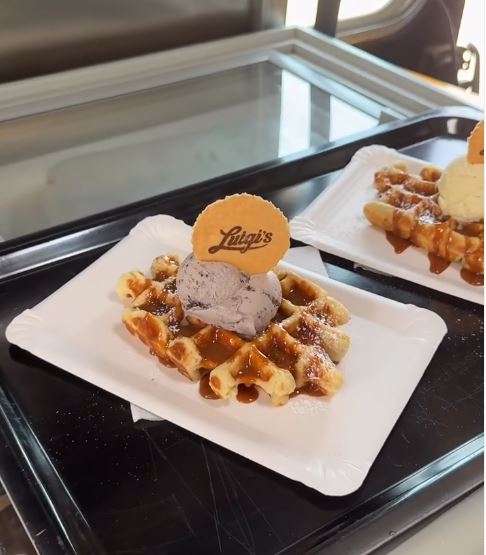
Crepes and Waffles: The aroma that fills the venue
Crepes are the stars of street cooking because people enjoy watching the process: the ladle of batter, the wooden spatula swirling in perfect circles, and the smoke that rises as the crepe is flipped.
-
En cocina: La masa se lleva hecha de casa en bidones listos para verter. La clave es tener la crepera a la temperatura exacta: si está fría, la masa se pega; si está muy caliente, se quema antes de poder estirarla. Trabaja con herramientas profesionales (la espátula larga y el rastrillo) y mantén las planchas siempre limpias.
-
For the menu:
-
The Sweet Classic: A crepe filled with hazelnut spread (Nutella or similar), sliced banana, and a sprinkle of crushed Lotus cookies for a touch of crunch.
-
El Gourmet Canalla: Crepe with dulce de leche, chunks of homemade brownie, and a pinch of flaky salt to cut through the sweetness.
-
-
The visual hook: Fold the crepe into a fan or cone shape and serve it on a cardboard base that shows off all the overflowing syrups and toppings on top. Seeing someone walking around with one in their hand sets off a domino effect of orders.
Have you decided what you’re going to cook yet?
At LACOMMA, we build the trailer that best fits your menu and your budget.
We hope these ideas will inspire you to get your project off the ground.
